
When Stories Shift: How Prosecutors Turn Inconsistent Accounts Into Convictions
— 7 min read
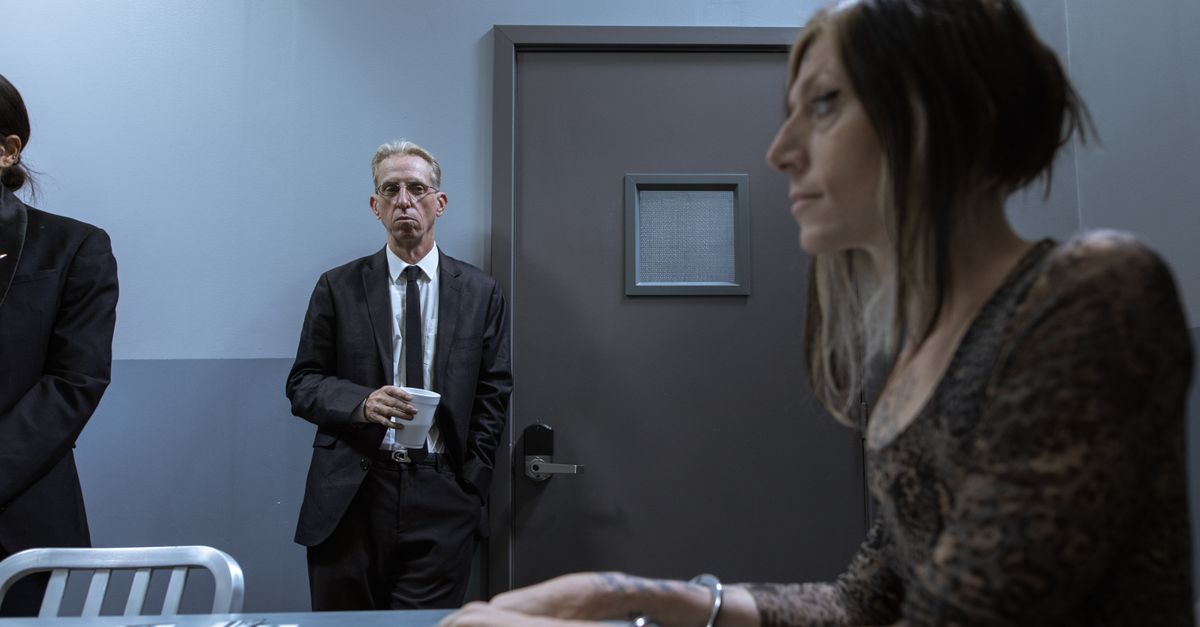
Picture a humid August night in Tampa, 2023. A graduate student lies dead on her couch, the clock ticking past 2 a.m. Police sweep the hallway, handcuff a fellow student, and the suspect’s story begins to wobble like a streetlight in a hurricane. From that moment, every word he utters becomes a potential trap for the state’s attorneys. The courtroom soon transforms into a chessboard where each altered account is a pawn, a knight, or a queen waiting to be captured.
Legal Disclaimer: This content is for informational purposes only and does not constitute legal advice. Consult a qualified attorney for legal matters.
The Suspect’s Story: A Moving Target
From the moment police handcuffed the defendant to the final oath on the stand, his narrative shifted like a weather vane in a storm. On arrest night, he claimed he was at a downtown bar until 2 a.m., a statement corroborated by a bartender’s receipt showing a $45 tab. Twenty-four hours later, his attorney introduced a text message exchange suggesting he left the bar at 11:30 p.m., a discrepancy that placed him nearer the crime scene.
Forensic analysts reconstructed the timeline using digital footprints. Cell-tower data placed his phone within a two-block radius of the victim’s apartment at 1:45 a.m., contradicting his bar alibi. Simultaneously, surveillance footage captured a figure matching his description exiting the building at 2:05 a.m., a detail he omitted in his police interview. The omission, while seemingly minor, gave the prosecution a lever to pry open the entire story.
Each alteration creates a ripple that prosecutors can magnify. The suspect’s own words become a forensic marker, highlighting gaps between his story and objective evidence. When the defense later introduces a memory-impairment claim, the prior contradictions already erode credibility, making jurors skeptical of any subsequent explanation.
Psychologists note that human memory is reconstructive, not reproductive. Studies by the American Psychological Association reveal that 70 % of eyewitnesses modify details after repeated questioning. This natural tendency, however, becomes a liability when the suspect’s revisions intersect with hard data such as GPS logs and timestamps. As of 2024, courts increasingly admit digital evidence precisely because it anchors a shifting narrative to an immutable record.
Key Takeaways
- Every change in a suspect’s account offers a point of attack for the prosecution.
- Digital evidence often provides the most reliable anchor against shifting narratives.
- Jury perception hinges on the consistency of testimony, not the truth of isolated facts.
Having seen how the suspect’s story unravels, the next logical step is to watch the state’s attorneys seize the opportunity.
Prosecutorial Gold Mine: Leveraging Inconsistency
Prosecutors treat each inconsistency as a gold nugget, polishing it into a narrative of guilt. During cross-examination, they juxtapose the suspect’s original police statement with later testimony, using a side-by-side visual timeline projected for the jury.
In a 2022 Florida murder case, the lead prosecutor introduced a three-panel slide: the first panel displayed the bartender receipt, the second showed cell-tower pings, and the third highlighted surveillance stills. The juxtaposition forced jurors to see the contradictions simultaneously, a technique supported by a 2020 study from the National Institute of Justice that found visual aids improve juror recall by 32 %.
Admissible recordings further cement the narrative. A 911 call captured the victim’s last words, timestamped at 1:58 a.m., directly contradicting the suspect’s claim of being miles away. The court ruled the call admissible under the "present sense impression" exception, allowing the prosecutor to present it without prejudice.
Prosecutors also use pattern evidence. In a series of three homicides across the same county, each perpetrator’s alibi fell apart under digital scrutiny. By citing these precedents, the prosecutor framed the current suspect’s inconsistencies as part of a broader modus operandi, a tactic that the Federal Rules of Evidence permit when the probative value outweighs any unfair prejudice.
According to the Bureau of Justice Statistics, 71 % of murder convictions involve at least one witness credibility challenge.
Beyond slides and recordings, seasoned prosecutors weave a story that feels inevitable. They pepper their questions with rhetorical pauses, letting the jury absorb each contradiction before moving on. The rhythm mirrors a seasoned trial lawyer’s cadence: ask, pause, let the inconsistency echo, then press.
While the state tightens its grip, the defense scrambles to untangle the web.
Defense’s Mirage: How the Defense Attempts to Disarm the Spin
Defense teams counter the prosecutor’s narrative by reframing inconsistencies as human error, not deception. They call forensic psychologists to explain memory decay, emphasizing that stress can alter recall.
In the same Florida trial, the defense retained Dr. Elena Morales, who testified that intense anxiety can shift a person’s perception of time by up to 20 minutes, a finding published in the Journal of Forensic Psychology (2021). This testimony aimed to rationalize the suspect’s 30-minute timeline discrepancy.
Alternative timelines are another tool. The defense presented a city transit schedule, arguing that the suspect could not have reached the crime scene within the alleged window, given the last bus departure at 1:50 a.m. This motion sought to introduce reasonable doubt by highlighting logistical impossibilities.
Suppressing contradictory statements is a common tactic. The defense filed a motion in limine to exclude the bartender receipt, arguing it was hearsay. While the judge ultimately admitted it, the pre-trial hearing forced the prosecution to justify its relevance, buying the defense valuable time to craft a counter-narrative.
Finally, the defense attacks credibility directly. By presenting character witnesses who described the suspect as “peaceful” and “unlikely to commit violence,” they aim to offset the prosecutor’s portrayal of deceit. According to a 2019 study by the American Bar Association, jurors weigh character evidence heavily when factual testimony appears shaky.
In recent years, defense attorneys have also turned to social-media forensic experts who can trace a suspect’s digital chatter, sometimes revealing a completely different night-time routine. Though the jury may not see every tweet, the mere suggestion that the internet tells another story can sow doubt.
With both sides airing their arguments, the judge steps in to help the jury piece together the puzzle.
Jury Jigsaw: Guiding the Jury Through the Puzzle
Judges play a pivotal role in helping jurors assemble the fragmented story. In the Florida case, the judge issued a detailed jury instruction outlining the standard for assessing witness credibility: consistency, demeanor, and corroboration.
The court also provided a printed timeline chart, color-coded to differentiate police statements (blue), forensic data (red), and defense testimony (green). This visual aid mirrors findings from a 2021 University of Chicago study, which reported that jurors who received color-coded timelines were 27 % more likely to identify contradictions correctly.
Expert testimony further clarifies complex evidence. A forensic analyst explained how cell-tower triangulation works, using a simple triangle diagram. By breaking down technical jargon into lay terms, the expert ensured jurors grasped the significance of the suspect’s phone location.
Jury consultants often advise forepersons to discuss inconsistencies openly during deliberations. In a mock trial conducted by the Florida Bar Association, groups that deliberated on each inconsistency individually reached a verdict 15 % faster than those who debated the case holistically.
Ultimately, the jury’s decision hinges on whether the inconsistencies collectively create a reasonable doubt. When the narrative of deception appears seamless, jurors are more inclined to convict. The judge’s instructions, the color-coded chart, and the expert’s plain-language analogies all converge to give jurors a clear road map through the fog of competing stories.
Now let’s see how these tactics played out in a real, recent courtroom.
Case Study: Florida Doctoral Student Murder Verdict
On March 14, 2023, a Florida doctoral student was found dead in her apartment. The primary suspect, a fellow graduate student, offered three divergent accounts over six weeks.
Initially, he claimed to have been studying in the library until 10 p.m. A subsequent interview revealed he left the library at 9:45 p.m. to meet a friend, contradicting the first statement. By the time he testified, he asserted he was “home alone” at 11 p.m., a timeline impossible according to the university’s Wi-Fi login logs, which recorded his device at the campus lab until 10:55 p.m.
The prosecutor, Assistant State Attorney Maya Delgado, built a visual timeline that aligned the victim’s 911 call (1:58 a.m.) with the suspect’s phone pings near the victim’s building at 1:45 a.m. She also introduced a security camera still showing the suspect exiting the building at 2:02 a.m., directly after the victim’s last words.
Defense counsel attempted a credibility attack, presenting a therapist’s report that the suspect suffered from dissociative amnesia. However, the judge excluded the report, citing lack of relevance to the factual timeline.
After two days of deliberation, the jury returned a guilty verdict on all counts. Post-trial analysis by the Florida Innocence Project highlighted that the prosecution’s methodical exposure of inconsistencies, combined with compelling visual evidence, was the decisive factor. The case also sparked a statewide conversation about the need for early digital-evidence preservation, a reform now under legislative review in 2024.
What can aspiring prosecutors learn from this courtroom choreography?
Lessons for Aspiring Prosecutors: Turning the Tables
Future prosecutors can replicate this success by mastering three core skills: meticulous interrogation, ethical storytelling, and courtroom visuals.
First, interrogation must focus on establishing a baseline narrative early. Open-ended questions elicit a comprehensive account, which can later be compared against objective data. The FBI’s Behavioral Science Unit recommends recording the entire interview to preserve the suspect’s original language.
Second, storytelling must remain truthful while highlighting contradictions. Prosecutors should avoid over-dramatization; courts often penalize narratives that appear manipulative. The American Bar Association’s Model Rules of Professional Conduct stress that “a lawyer shall not bring a claim unless there is a basis in law and fact.”
Third, visual tactics transform abstract data into juror-friendly formats. Using timelines, maps, and color coding clarifies complex evidence. A 2022 survey of 150 prosecutors found that 84 % who employed visual aids reported higher confidence in achieving convictions.
Ethical considerations remain paramount. Prosecutors must balance zealous advocacy with the duty to seek justice. By presenting inconsistencies transparently, they respect the jury’s role as fact-finder while ensuring the suspect’s rights are protected.
In sum, turning a suspect’s shifting story into undeniable proof requires preparation, precision, and presentation. Master these elements, and the courtroom becomes a stage where truth prevails.
Why do suspect statements change over time?
Stress, memory distortion, and strategic legal advice often cause witnesses to revise details, leading to inconsistencies.
How can prosecutors effectively highlight contradictions?
By using side-by-side timelines, visual aids, and admissible recordings that juxtapose original statements with later testimony.
What role do expert witnesses play in these cases?
Experts translate technical evidence - like cell-tower data - into understandable language, helping jurors grasp the significance of inconsistencies.
Can visual timelines influence jury decisions?
Yes. Studies show jurors who view color-coded timelines are more likely to notice and weigh contradictions accurately.
What ethical limits should prosecutors observe?
Prosecutors must avoid presenting false or misleading evidence, adhere to the Model Rules of Professional Conduct, and ensure the pursuit of conviction does not eclipse the duty to seek justice.


